
About HRSK
Legally registered under the Societies Act Cap 108, Kenya. Dedicated to harm reduction since our founding by Dr. Michael Kariuki and Dr. Nashon.
Harm Reduction Society Kenya (HRSK)
Harm Reduction Society Kenya (HRSK) is a legally registered society in Kenya under the Societies Act Cap 108. We are dedicated to the uptake of harm reduction interventions among communities in Kenya, with a key focus on Alcohol, Tobacco, and Pesticides.
Our organisation was founded by Dr. Michael Kariuki and Dr. Nashon, who recognised the urgent need for evidence-based harm reduction approaches in Kenya. Since our official launch in November 2024, we have been working tirelessly to build healthier, better-informed communities.
HRSK collaborates with health professionals, government agencies, academic institutions, and international organisations to advance the harm reduction agenda in Kenya and across East and Central Africa.
What is Harm Reduction?
Harm reduction refers to a range of intentional, pragmatic practices and public health policies designed to lessen the negative social and physical consequences associated with various human behaviours.
Harm reduction accepts that some people will engage in behaviours that carry risk, and aims to reduce the harm from those behaviours rather than demanding abstinence as the only acceptable outcome. It is a compassionate, evidence-based, and human rights-centred approach to public health.
"Harm reduction is not about encouraging harmful behaviours. It is about meeting people where they are, providing accurate information, and supporting safer choices that save lives and improve community health."
Mission & Vision
Our Mission
To offer harm reduction solutions in the areas of alcohol, tobacco, and pesticides through education, advocacy, capacity building, and evidence-based programs that improve the health and well-being of communities across Kenya.
Our Vision
A Kenya and Africa where every person has access to accurate, non-judgmental health information and where public health policy on alcohol, tobacco, and pesticides is guided by evidence, compassion, and a commitment to human dignity and harm reduction as an essential component of public health strategy.

HRSK Milestones & Events
From our official launch in November 2024 to major national and regional conferences, HRSK has been at the frontline of harm reduction in Kenya.
KCOA 26th Annual Scientific Conference
Nov 13–15, 2024 • Mombasa
HRSK presented on harm reduction in clinical practice, reaching hundreds of clinical officers from across Kenya.
KMA 52nd Annual Scientific Conference
Nov 2024 • Nairobi
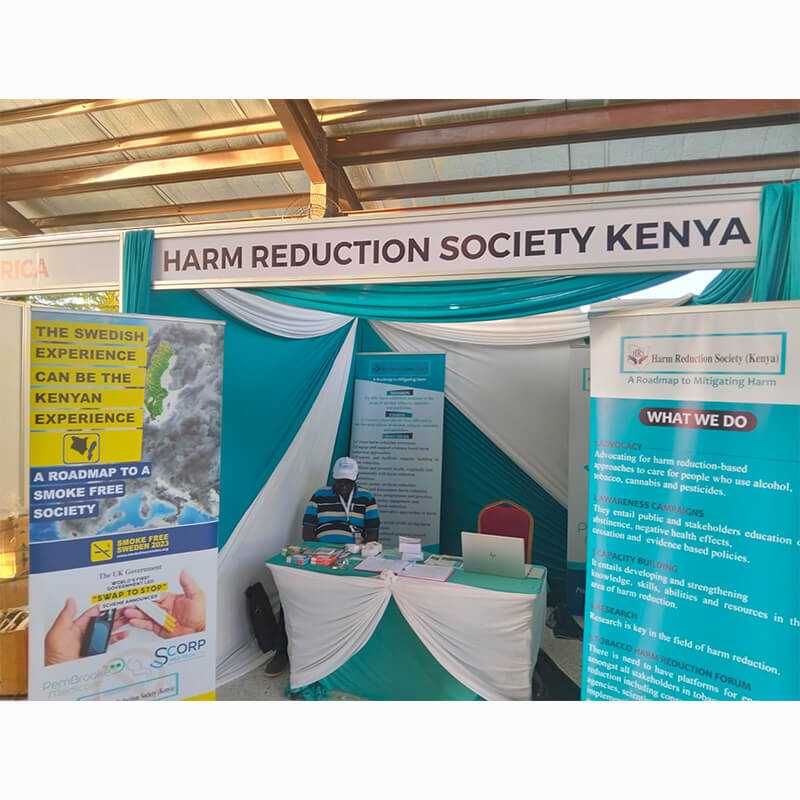
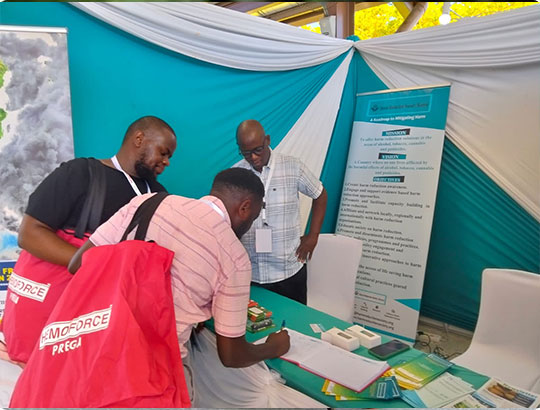
HRSK exhibited and presented at the Kenya Medical Association's 52nd Annual Scientific Conference.
HRSK Official Launch
Nov 25, 2024 • Nairobi
The official launch of HRSK — attended by health professionals, government officials, community leaders, and media.
HRSK 1st Annual Workshop
Nov 25–26, 2024 • Nairobi
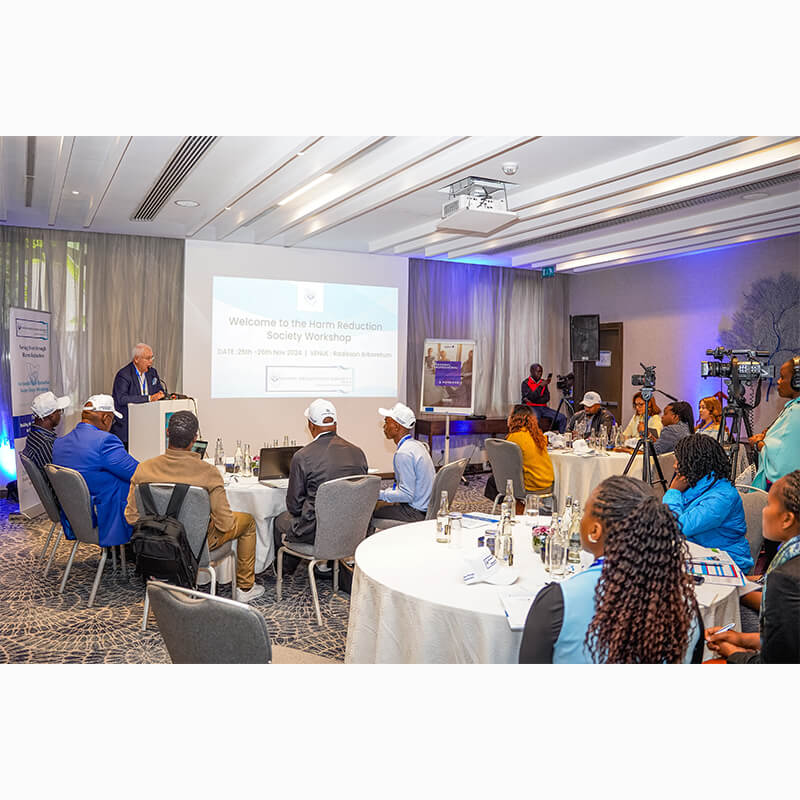
A landmark two-day workshop on harm reduction for alcohol, tobacco, and pesticides, charting the course for HRSK's programmes.
4th KAFP Annual Scientific Conference
May 21–23, 2025 • Mombasa
HRSK presented on integrating harm reduction into family medicine practice across Kenya.
45th PSK Annual Scientific Conference
Jun 18–20, 2025 • Mombasa
HRSK highlighted the vital role of pharmacists in tobacco harm reduction at this major pharmacy conference.
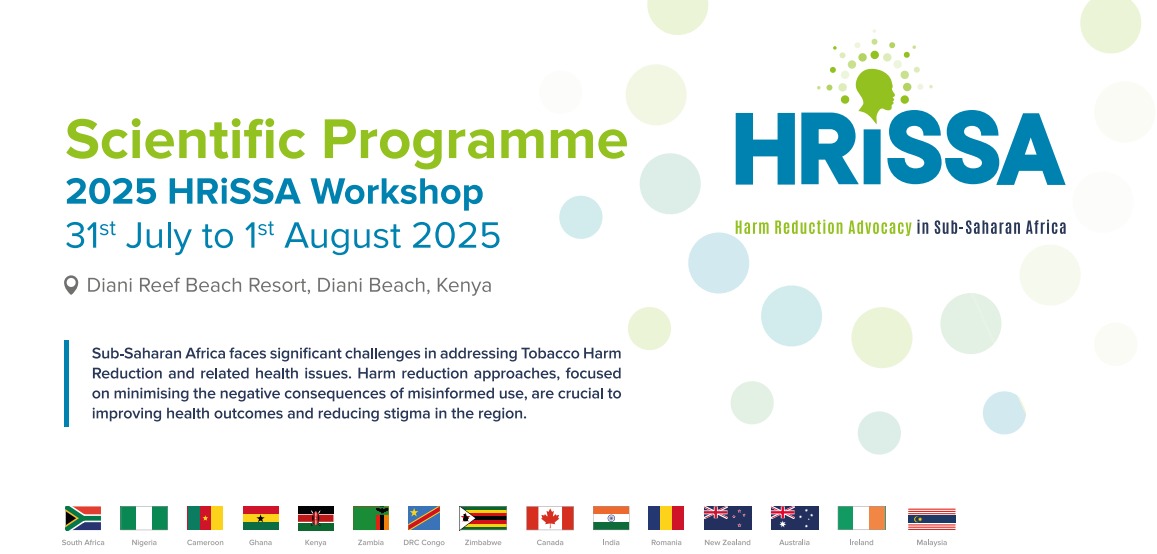
2025 HRiSSA Workshop
Jul 31 – Aug 1, 2025 • Diani Beach
A regional workshop on Tobacco Harm Reduction in Sub-Saharan Africa. HRSK played a key role in organising this gathering.
10th ECSACOP & 28th KAP Conference
Aug 27–30, 2025 • Mombasa
Joint conference of the East, Central and Southern Africa College of Pharmacy and Kenya Association of Pharmacists.
Cochrane Africa Indaba 2025
2025 • Africa
HRSK participated in this continental gathering of evidence synthesis researchers and public health advocates.
HRSK Official Launch
Watch highlights from the official launch of the Harm Reduction Society Kenya in November 2024 at CPA Center, Nairobi.
About Our Organisation
Registered under Societies Act Cap 108, Kenya
Founded by Dr. Michael Kariuki and Dr. Nashon
Officially launched November 25, 2024
Headquartered at CPA Center, Nairobi
Programmes in 6+ Kenyan counties
9+ national and regional events attended (2024–2025)
Focus areas: Alcohol, Tobacco, Cannabis, Pesticides
Active across Kenya, East and Central Africa
Society Objectives
As registered under the Societies Act, HRSK is mandated to pursue the following 13 objectives:
To promote harm reduction strategies among people who use alcohol, tobacco, and pesticides.
To conduct research on harm reduction approaches and disseminate findings to policymakers and the public.
To build the capacity of health professionals, community workers, and volunteers in harm reduction.
To raise awareness about the risks associated with alcohol, tobacco, and pesticide use through public campaigns.
To advocate for evidence-based harm reduction policies at local, national, and regional levels.
To establish and maintain partnerships with government agencies, NGOs, academic institutions, and international organisations.
To facilitate access to harm reduction tools, resources, and services for vulnerable communities.
To develop and distribute educational materials on harm reduction in accessible formats and local languages.
To establish peer support networks and community-based harm reduction programs.
To monitor and evaluate the effectiveness of harm reduction programs and adapt strategies based on evidence.
To engage with the media to promote accurate and constructive messaging about harm reduction.
To mobilise resources for harm reduction activities in Kenya and East Africa.
To collaborate with regional and international harm reduction networks to share knowledge and best practices.
Ready to Join Our Mission?
Whether you are a healthcare professional, researcher, community leader, or concerned citizen, there are many ways to support harm reduction in Kenya.