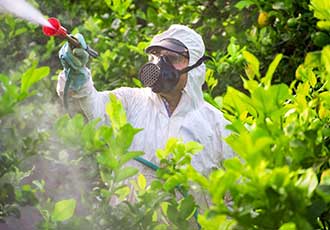
Promoting Safe Pesticide Use in Agriculture
Pesticide poisoning is a significant but often overlooked public health crisis in rural Kenya. Thousands of farmers and their families are exposed to toxic pesticides each year, resulting in acute and chronic health consequences. HRSK raises awareness on safe pesticide use and advocates for policies that protect farming communities.
Pesticide harm reduction focuses on minimising the risks associated with the use of highly hazardous pesticides (HHPs). These chemicals, while effective in pest control, pose significant health and environmental risks. By adopting safer practices and alternatives, we can protect both human health and the environment.
Our programme targets smallholder farming communities across Kenya, with particular attention to women farmers and children who face disproportionate exposure risk. We provide practical, culturally appropriate training on safe handling, storage, and disposal of pesticides.

How We Reduce Pesticide-Related Harm
Practical, field-tested strategies that protect farmers, families, and communities from the dangers of pesticide exposure.
Buffer Zones
Establishing buffer zones around areas where pesticides are used to reduce exposure to non-target areas, prevent drift, and protect nearby water sources and communities.
Education & Training
Educating farmers and workers on safe pest management practices and alternative pest control methods to reduce reliance on chemical pesticides. Training programmes address risks and proper handling.
Personal Protective Equipment
Ensuring users wear proper PPE when handling pesticides — gloves, masks, goggles, and protective clothing — to minimise direct exposure and reduce acute poisoning incidents.
Proper Labelling
Ensuring pesticides are labelled clearly, including for users who cannot read. Labels must include safety instructions, warnings, and first-aid measures, including in Kiswahili and local languages.
Observe Preharvest Intervals
Following proper preharvest intervals to minimise pesticide residues on crops. This ensures that crops are safe for consumption and reduces the risk of community-level exposure.
Integrated Pest Management
Promoting IPM strategies that combine biological, cultural, and mechanical pest control to reduce chemical pesticide dependence — focusing on long-term prevention and sustainable farming.

What We Do on the Ground
- Community training on safe pesticide handling, storage, and disposal
- Distribution of PPE information and guidance for smallholder farmers
- Advocacy for stricter pesticide regulation and labelling in Kiswahili
- First aid training for pesticide poisoning response in rural communities
- Promotion of integrated pest management (IPM) as an alternative
- Research and documentation of pesticide poisoning cases in Kenya
- Collaboration with county agriculture departments on safety standards
- Youth awareness programmes in farming communities

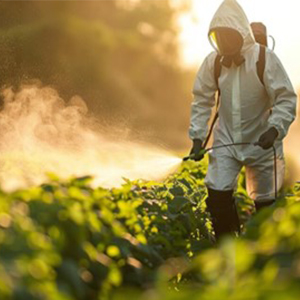

Protect Kenya's Farmers from Pesticide Harm
Support HRSK's work training and protecting rural farming communities across Kenya.