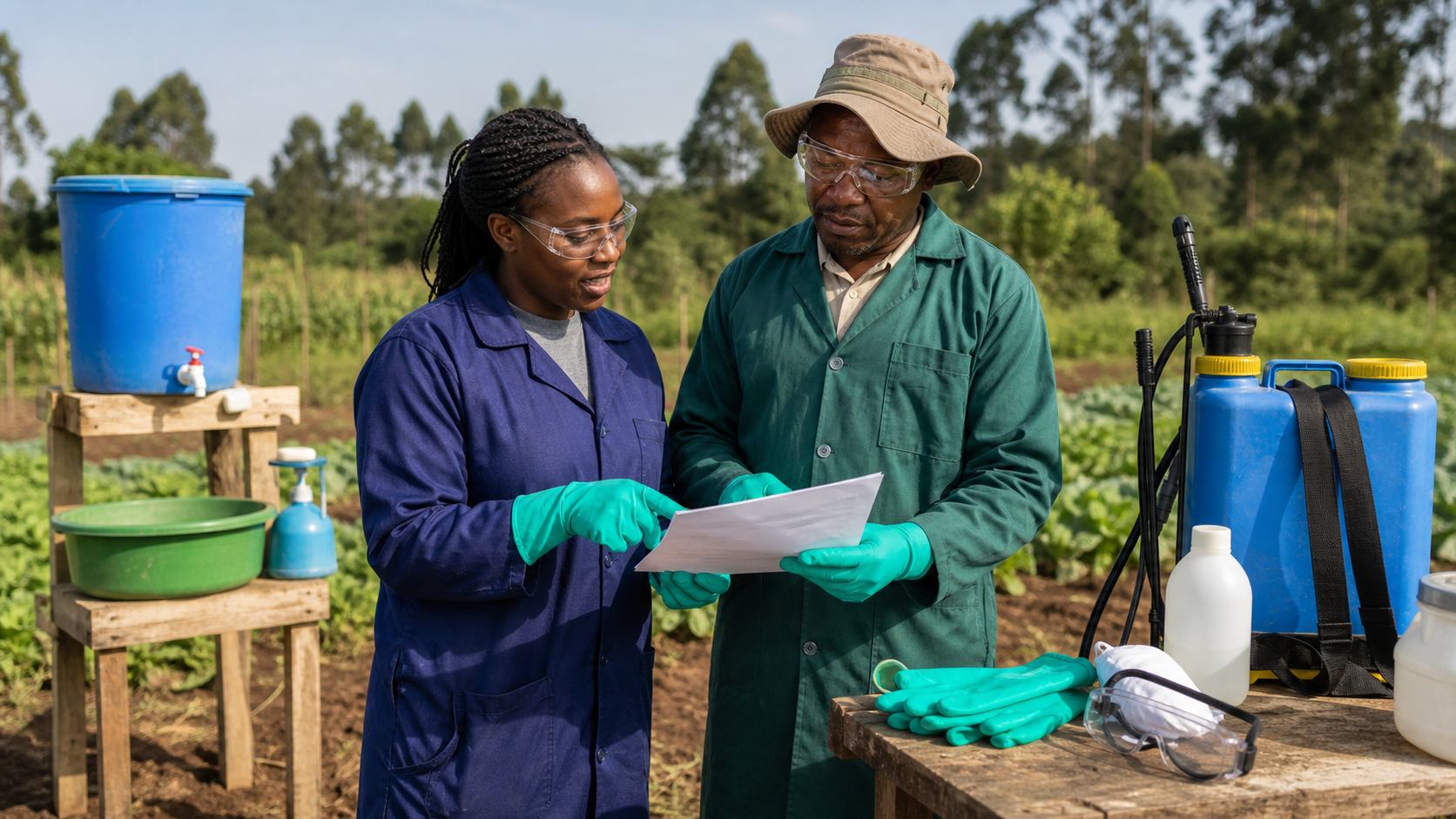
Pesticide safety starts before spraying. Use this checklist to reduce risk.
Pesticide harm reduction begins before a pump is filled. Many poisoning incidents happen because a farmer is rushed, the label is missing, protective gear is incomplete, the weather is wrong, or children are nearby during mixing. A few checks before spraying can prevent serious harm.
This checklist is designed for Kenyan farmers, farm workers, extension officers, and households that store or use agricultural chemicals. It is not a replacement for product labels or professional advice, but it gives a practical safety routine that can be used before every application.
1. Confirm the Product and the Purpose
Before spraying, confirm that the pesticide is registered for the crop and the target pest. Using the wrong product can waste money, damage crops, increase residues, and expose workers to unnecessary risk.
- Check that the container has a readable label.
- Confirm the crop, pest, dose, and application method.
- Do not use chemicals from unmarked bottles or reused food containers.
- Reject products that look tampered with, expired, or poorly sealed.
2. Read the Label for Waiting Periods
The pre-harvest interval tells farmers how long to wait before harvesting after spraying. The re-entry interval tells workers when it is safe to return to the field. Ignoring these instructions can expose families, workers, and consumers to pesticide residues.
3. Check Protective Equipment
Protective equipment only works when it is complete and in good condition. Torn gloves, open shoes, soaked clothing, or a poorly fitted mask can turn a routine spray into a poisoning risk.
- Wear chemical-resistant gloves, long sleeves, long trousers, boots, eye protection, and suitable respiratory protection where required.
- Keep a separate set of clothes for spraying and wash them separately from family clothing.
- Do not eat, drink, smoke, or chew while mixing or spraying.
- Wash hands and exposed skin immediately after handling chemicals.
4. Plan for Weather and Drift
Wind can carry pesticides onto people, animals, neighbouring crops, homes, and water sources. Rain can wash chemicals into soil and rivers. Strong heat can increase evaporation and worker exposure.
Spray only when conditions are calm and suitable for the product. If wind direction changes or rain begins, stop and reassess.
5. Protect Children, Families, and Animals
Children are especially vulnerable to pesticide exposure because of their body size and behaviour. They may touch containers, play near treated areas, or drink from unsafe containers. A safe farm routine should keep children, pregnant women, elderly people, and animals away from mixing and spraying areas.
- Mix pesticides away from the house, kitchen, and water sources.
- Never store pesticides near food, animal feed, or medicines.
- Lock products away after use.
- Keep empty containers out of household use.
6. Prepare for Accidents
Every spraying day should include a basic emergency plan. Keep clean water, soap, a phone, emergency contacts, and the product label nearby. If exposure occurs, remove contaminated clothing, wash skin with water and soap, and seek medical help quickly. Carry the product label to the health facility if possible.
"The safest pesticide application is the one planned before the sprayer is opened."
HRSK's Message to Farmers
Pesticides can protect crops, but they must be handled with respect. Safety is not a luxury for large farms. It is a basic health practice for every household that uses agricultural chemicals.
HRSK continues to advocate for farmer education, safer product handling, better poisoning surveillance, and stronger community awareness on pesticide harm reduction.
